Have you ever looked back on your life and wished you could change some of your choices?
Many people carry memories of mistakes, missed opportunities, or seasons when they relied more on themselves than on God.
The good news is that the Bible is filled with stories of imperfect people whom God transformed for His purpose. One of the most powerful examples is Jacob.
When people search for Jacob in the Bible meaning, they are often seeking more than historical information.
They want to understand the spiritual significance of Jacob’s life and what his story can teach believers today. His journey is full of lessons about faith, struggle, forgiveness, and God’s faithfulness.
Jacob was not a perfect man. He struggled with fear, deception, and family conflict. Yet God chose him for a special purpose.
Through years of challenges and spiritual growth, Jacob became one of the most important figures in Scripture. His life shows how God can take someone with weaknesses and transform them into a person of faith.
Many Christians relate to Jacob because his story feels real. He made mistakes, faced consequences, and experienced moments of doubt.
At the same time, he encountered God’s presence in powerful ways and learned to trust Him.
The story of Jacob reminds us that God’s plans are greater than our failures. No matter where we are on our faith journey, God can guide us, shape us, and give us a new beginning.
Biblical Meaning of Jacob in the Bible
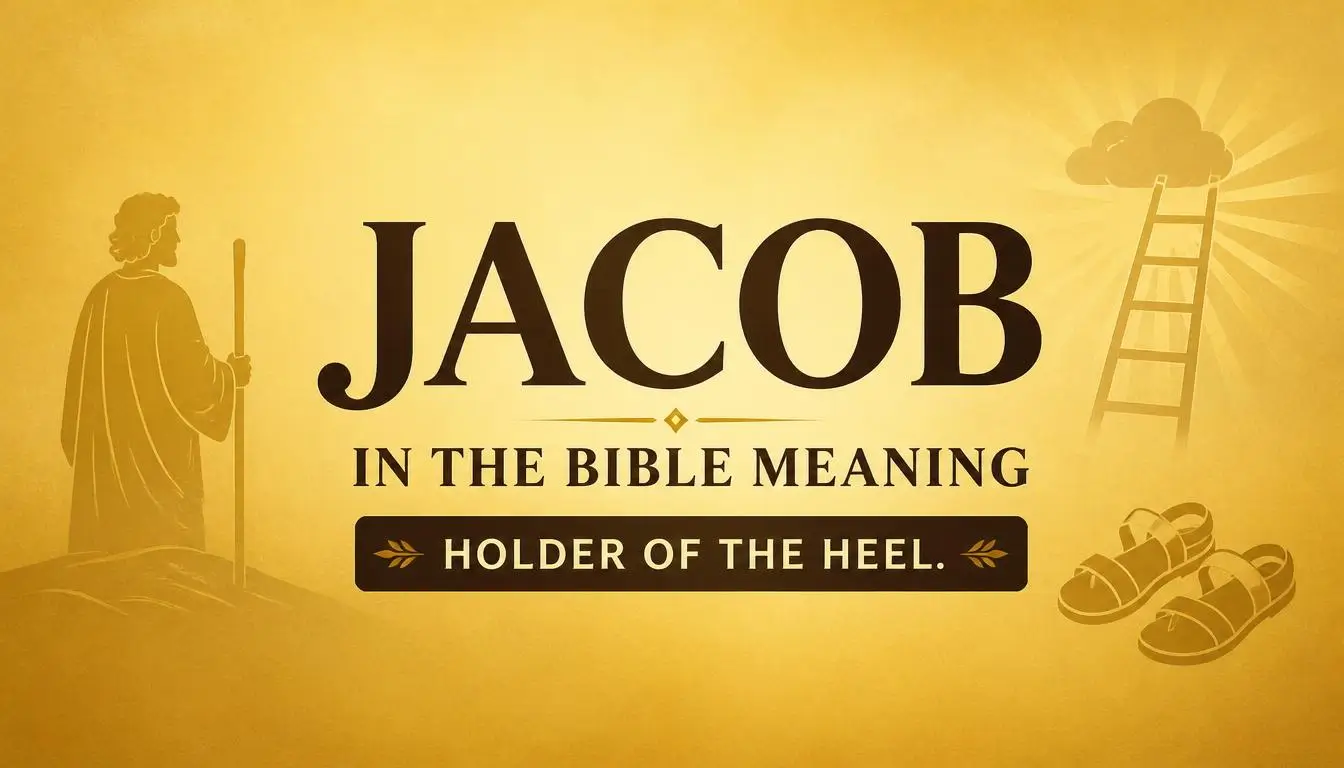
The biblical meaning of Jacob begins with his name. The name Jacob comes from a Hebrew word often translated as “holder of the heel” or “supplanter.”
This meaning reflects the unusual circumstances surrounding his birth.
According to Genesis 25:26, Jacob was born holding the heel of his twin brother Esau. Even before birth, the brothers struggled with one another.
This detail became symbolic of the challenges and conflicts that would shape Jacob’s early life.
Jacob Represents Human Weakness and Imperfection
One of the strongest themes in Jacob’s story is human weakness.
Jacob was chosen by God, but he was far from perfect. Early in life, he relied on cleverness and manipulation to achieve his goals.
He persuaded Esau to give up his birthright and later deceived his father Isaac to receive the blessing meant for his older brother.
These actions caused division within the family and forced Jacob to flee from home.
Many readers wonder why God would choose someone who made such serious mistakes. The answer reveals an important spiritual truth. God’s grace is not limited to perfect people.
Jacob’s story teaches that God works through imperfect individuals. He sees potential where others see failure. He offers redemption instead of rejection.
This message gives hope to anyone who feels unworthy or burdened by past mistakes.
Jacob as a Symbol of God’s Covenant
Jacob’s life is closely connected to God’s covenant promises.
The covenant first given to Abraham continued through Isaac and then through Jacob. God chose Jacob to become part of His divine plan for His people.
One of the most important moments occurred when Jacob was traveling alone and stopped to rest. That night he had a remarkable dream.
In Genesis 28:10-15, Jacob saw a ladder stretching from earth to heaven with angels moving up and down upon it.
Above the ladder stood the Lord, who repeated the covenant promises given to Abraham.
God promised:
- A great family line
- A future homeland
- Divine protection
- Blessing for all nations
This dream changed Jacob’s life.
It revealed that God was present with him even when he felt alone and uncertain.
The ladder became a powerful example of biblical symbolism, representing the connection between heaven and earth and God’s ongoing relationship with humanity.
Jacob’s Transformation at Bethel
After the dream, Jacob woke up with a new awareness of God’s presence.
He declared in Genesis 28:16, “Surely the Lord is in this place, and I was not aware of it.”
This statement reflects an important spiritual awakening.
Many believers experience moments when they suddenly realize that God has been guiding them all along. What once seemed like ordinary circumstances becomes evidence of God’s hand at work.
Bethel became a turning point in Jacob’s journey.
It marked the beginning of a deeper relationship with God and a growing understanding of faith.
Jacob Wrestling with God
Perhaps the most famous event in Jacob’s life happened many years later.
As Jacob prepared to meet Esau again, he spent a night alone. During that night he wrestled with a mysterious heavenly being.
The story appears in Genesis 32:24-28.
Jacob wrestled until daybreak and refused to let go until he received a blessing.
During this encounter, God changed his name from Jacob to Israel. This name change carried deep spiritual significance.
Jacob represented his old identity, shaped by struggle, fear, and self-reliance.
Israel represented a new identity based on faith, perseverance, and God’s purpose.
This transformation is one of the greatest examples of spiritual renewal found in Scripture.
Positive Meanings Associated with Jacob
Jacob’s story contains many encouraging messages:
Transformation
God transformed Jacob’s character over time.
He did not remain the same person he was in his youth.
Perseverance
Jacob endured many hardships, yet he continued moving forward.
His story teaches believers to remain faithful during difficult seasons.
Divine Grace
God continued to bless Jacob despite his flaws.
This reveals the depth of God’s mercy and compassion.
Faith Development
Jacob’s relationship with God matured through trials.
Challenges became opportunities for spiritual growth.
New Identity
Jacob’s new name symbolizes the new life God offers to those who trust Him.
Warning Lessons from Jacob’s Story
Jacob’s life also contains important warnings.
His deception created painful consequences. Family relationships suffered because of dishonesty and manipulation.
These experiences remind believers that actions have consequences.
Trying to achieve God’s promises through human schemes often leads to unnecessary difficulties. Yet even these failures became part of God’s refining process.
The story shows that God can redeem painful situations and use them for spiritual growth.
Spiritual Significance and Symbolism
The spiritual significance of Jacob reaches far beyond the historical events of his life.
His story reflects the spiritual journey many believers experience today.
A Symbol of Spiritual Transformation
Perhaps the greatest lesson from Jacob’s life is transformation.
People often begin their faith journey carrying fears, doubts, and weaknesses. Like Jacob, they may struggle with control, pride, or uncertainty.
Over time, God works within their hearts. Prayer, worship, and life’s experiences shape their character.
The transformation may not happen quickly, but it happens steadily.
Jacob reminds believers that spiritual growth is a process.
A Symbol of God’s Grace
Jacob did not earn God’s favor through perfection. Instead, he experienced God’s grace despite his shortcomings.
This truth lies at the heart of the Christian faith. God’s love is not based on flawless behavior.
His grace reaches people in their weakness and leads them toward change.
Many Christians find comfort in Jacob’s story because it proves that God does not give up on imperfect people.
A Symbol of Spiritual Awakening
Jacob’s dream at Bethel symbolizes spiritual awakening.
There are moments when believers suddenly recognize God’s presence in a deeper way. Perhaps it happens during prayer.
It happens during a difficult season.
Perhaps it comes through reading Scripture. These moments often change the direction of a person’s faith journey.
Jacob’s encounter reminds believers to stay open to God’s voice.
A Symbol of New Identity in Christ
Jacob becoming Israel points to one of the Bible’s most important themes: new identity.
God often gives people a fresh start. He sees beyond past failures and calls people into His purpose.
For Christians, this reflects the transformation available through faith. The old life does not define the future.
God creates something new.
A Symbol of God’s Presence
Jacob frequently experienced God’s presence during uncertain times. If he was traveling, working, or facing fear, God remained with him.
This provides comfort for believers today. God’s presence is not limited to churches or special moments.
He walks with His people through everyday life. His guidance, protection, and love remain constant.
Biblical Interpretations in Dreams or Real Life
Many people wonder If Jacob’s story carries meaning in dreams or personal experiences.
In dream interpretation, Jacob often symbolizes spiritual growth, transformation, and God’s guidance.
Dreaming About Jacob
Seeing Jacob in a dream may suggest:
- Personal change
- Spiritual development
- A need to trust God
- Growth through challenges
- A season of faith-building
Such dreams often encourage reflection and prayer.
Dreaming About Jacob’s Ladder
A ladder reaching toward heaven may symbolize:
- Connection with God
- Spiritual awakening
- Divine communication
- Renewed faith
- God’s presence in difficult circumstances
Many Christians view this image as a reminder that God is actively involved in their lives.
Dreaming About Wrestling
Dreams involving wrestling may reflect inner struggles.
These struggles could involve:
- Major decisions
- Faith questions
- Emotional challenges
- Personal growth
Jacob’s wrestling experience reminds believers that spiritual struggles can lead to blessings and transformation.
Real-Life Applications
Jacob’s story often mirrors real-life experiences.
Many people go through seasons of waiting, uncertainty, and growth.
A difficult situation may feel frustrating in the moment.
Later, however, it becomes clear that God was using that season to strengthen faith and build character.
Jacob’s journey teaches believers to trust God even when they cannot see the full picture.
Prayer, patience, and faith remain essential during uncertain times.
Practical Lessons & Faith Insights
Jacob’s life offers practical lessons for daily Christian living:
- Trust God’s timing instead of forcing your own plans.
- Remain faithful during difficult seasons.
- Seek God’s guidance through prayer.
- Learn from past mistakes without being trapped by them.
- Believe that God can transform weaknesses into strengths.
- Remember that spiritual growth often comes through challenges.
- Embrace the new identity God offers through His grace.
Jacob’s story reminds believers that every struggle can become part of God’s greater purpose.
FAQs:
What does Jacob symbolize in the Bible?
Jacob symbolizes transformation, perseverance, faith, and God’s grace. His life shows how God can change a flawed person into someone who fulfills a divine purpose.
Why did God change Jacob’s name to Israel?
God changed Jacob’s name after his wrestling encounter as a sign of spiritual transformation. The new name reflected a new identity and a deeper relationship with God.
What is the spiritual lesson from Jacob’s ladder dream?
Jacob’s ladder symbolizes God’s presence, divine communication, and the connection between heaven and earth. It reminds believers that God is always near.
Why is Jacob important in Christian belief?
Jacob is important because he became one of the patriarchs of Israel and played a major role in God’s covenant plan. His story also demonstrates God’s faithfulness and transforming grace.
What can Christians learn from Jacob today?
Christians can learn to trust God during difficult seasons, seek spiritual growth, embrace God’s grace, and believe that transformation is possible through faith.
Conclusion:
The Jacob in the Bible meaning centers on transformation, faith, perseverance, and God’s unfailing grace.
His story begins with struggle and imperfection but ends with blessing and purpose. Through dreams, challenges, and encounters with God, Jacob learned to trust the Lord more deeply.
His journey reminds believers that God can use anyone, regardless of their past mistakes. The same God who guided Jacob through fear, change, and spiritual growth continues to guide His people today.
When life feels uncertain, Jacob’s story offers hope that God is still working behind the scenes, shaping hearts and leading His children toward His perfect plan.
Trust Him, seek Him in prayer, and walk forward in faith knowing that His grace can transform every season of life.
Read More Posts:
- Hope in the Bible Meaning, Verses, and Life Lessons (2026)
- Israel in the Bible: Meaning, History, Symbolism & Faith (2026)
- Centurion in the Bible: Role, Story, and Spiritual Meaning (2026)

David Mitchell writes thoughtful Bible commentaries and study guides, helping readers understand scripture deeply. He focuses on practical spiritual growth for all ages. His work at bibleverseez.com inspires daily reflection and faith.